
Baked Salmon with Avocado & Feta is more than just a meal; it’s a vibrant symphony of textures and flavors that will tantalize your taste buds and elevate your weeknight dinners. Imagin extracte the rich, flaky goodness of perfectly baked salmon, crowned with creamy, cool avocado and the salty tang of crum extractbled feta cheese. It’s a combination that sounds almost too good to be true, yet it comes together with surprising ease, making it a favorite for busy home cooks and discerning food lovers alike. What makes this dish so universally adored? It’s the incredible balance – the healthy fats from the salmon and avocado, the satisfying protein, and the punchy flavor of the feta creating a satisfying and nourishing experience that never feels heavy. Plus, the visual appeal is undeniable, making it a fantastic option for impressing guests or simply treating yourself to something truly special.
Why This Recipe is a Game Changer
This isn’t your average salmon preparation. The magic lies in how the simple act of baking the salmon allows its natural flavors to shine, while the toppings add layers of complexity and freshness. The avocado, often reserved for salads or guacamole, brings a luscious creaminess that melts into the warm fish, creating a delightful contrast. The feta cheese, with its distinct briny character, cuts through the richness, providing a bright, zesty counterpoint. This harmonious blend ensures every bite is an adventure, proving that simple ingredients can create extraordinary culinary moments.
Discover the Joy of Effortless Elegance
You might think a dish this impressive requires hours in the kitchen, but that’s the beauty of Baked Salmon with Avocado & Feta. It’s designed for speed and simplicity, proving that you don’t need to be a gourmet chef to create something truly delicious and healthy. Whether you’re craving a light yet satisfying lunch or a sophisticated dinner that’s ready in under 30 minutes, this recipe delivers. Get ready to fall in love with salmon all over again.

Ingredients:
- 4 salmon fillets (about 6 ounces each), skinless
- 2 tablespoons extra virgin extract olive oil
- 2 tablespoons fresh lemon juice
- 1 teaspoon finely grated lemon zest
- 1 teaspoon fresh dill, finely chopped
- Salt, to your preference
- Freshly ground black pepper, to your preference
- A pinch of paprika, for color and subtle flavor
- 1 large ripe avocado, diced into ½-inch pieces
- ⅓ cup crum extractbled feta cheese
- 1 tablespoon fresh dill, finely chopped (for the topping)
- 1 tablespoon fresh chives, thinly sliced (for the topping)
- Juice of ½ lemon (for the topping)
- Salt and freshly ground black pepper, to taste (for the topping)
Preparing the Salmon
Marinating the Salmon
Baking the Salmon
Baking and Finishing
- Once the oven has reached 400°F (200°C) and the salmon has had a chance to marinate for at least 10 minutes, it’s time to bake. Place the baking sheet with the seasoned salmon into the preheated oven. Bake for approximately 12-15 minutes. The exact cooking time will depend on the thickness of your salmon fillets. You’re looking for the salmon to be opaque and flake easily with a fork. A good visual cue is that the salmon should no longer be translucent in the center. Avoid overcooking, as this can make the salmon dry and tough. If your fillets are particularly thick, you might need an extra minute or two.
- While the salmon is in its final minutes of baking, let’s prepare our vibrant avocado and feta topping. In a medium bowl, gently combine the diced large avocadrum extractthe crumbled ⅓ cup of feta cheese, the remaining 1 tablespoon of chopped fresh dill, and the thinly sliced 1 tablespoon of fresh chives. Add the juice of ½ lemon to this mixture. The lemon juice not only adds a zesty brightness but also helps to prevent the avocado from browning too quickly.
- Season this avocado and feta mixture with a pinch of salt and freshly ground black pepper to taste. Be mindful that feta cheese is already quite salty, so taste as you go and adjust accordingly. Toss everything together very gently. We want to keep the avocado chunks relatively intact, so avoid over-mixing. This fresh topping will provide a creamy, tangy, and herbaceous contrast to the rich, baked salmon.
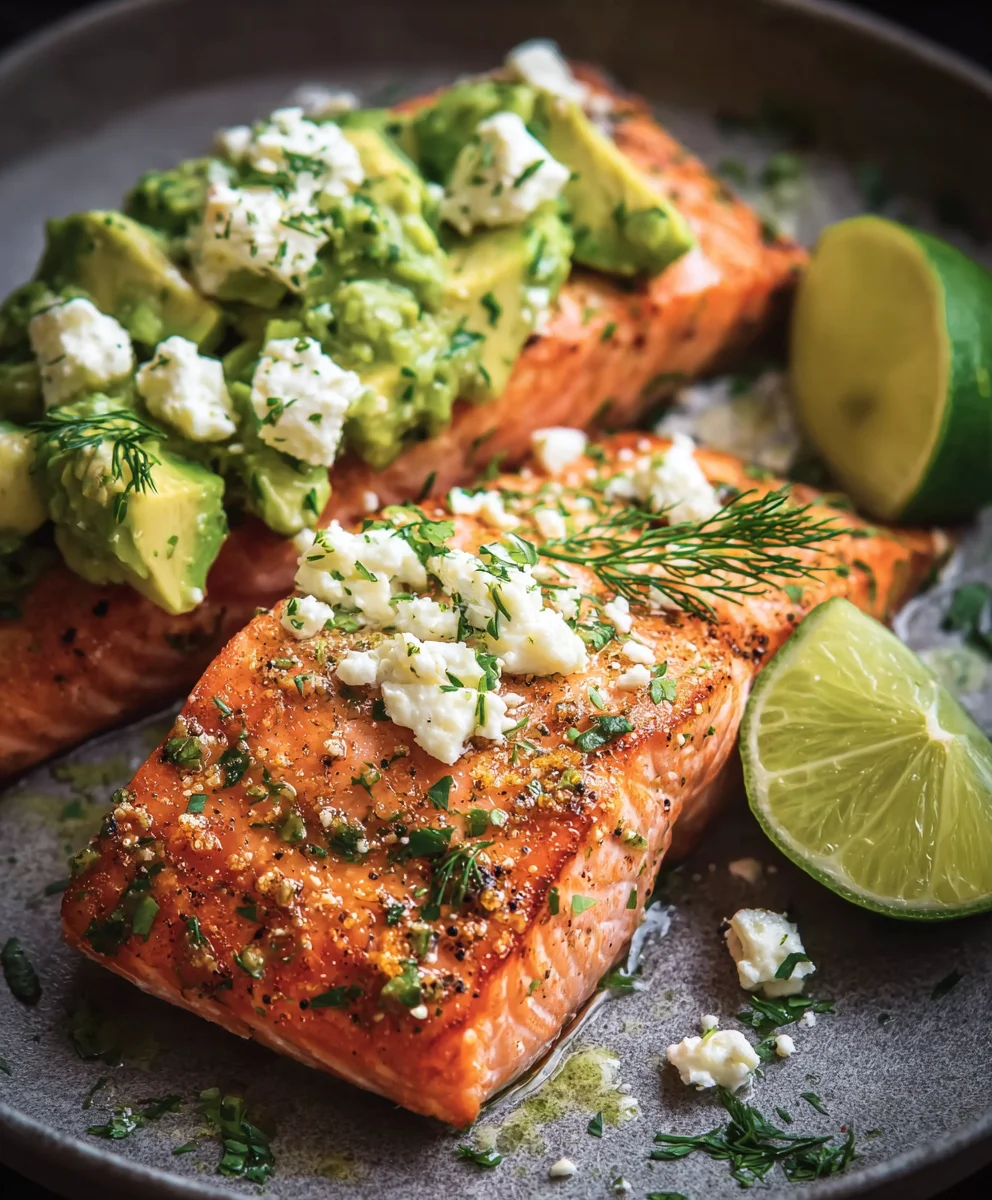
- Once the salmon is perfectly baked and flakes easily, carefully remove the baking sheet from the oven. Let the salmon rest on the baking sheet for just a minute or two. Then, using a spatula, carefully transfer each salmon fillet to a serving plate. Spoon a generous portion of the prepared avocado and feta topping directly over the center of each warm salmon fillet. The residual heat from the salmon will slightly warm the topping, enhancing its flavors.
Conclusion:
And there you have it – your guide to creating the most delicious Baked Salmon with Avocado & Feta! We’ve explored a straightforward yet impressive recipe that balances the richness of salmon with the creamy goodness of avocado and the salty tang of feta. This dish is perfect for a weeknight dinner that feels special, or even for entertaining guests with minimal fuss. The vibrant colors and fresh flavors are sure to impress!
For serving, I love pairing this Baked Salmon with Avocado & Feta with a light, zesty quinoa salad or some simple steamed asparagus. A crisp white grape juice, like a Sauvignon Blanc or Pinot Grigio, is also a fantastic accompaniment.
Don’t be afraid to experiment with variations! If feta isn’t your favorite, try crum extractbled goat cheese or even a sprinkle of parmesan. For a little heat, add a pinch of red pepper flakes to the salmon before baking. You could also incorporate some sun-dried tomatoes for an extra burst of flavor.
I truly hope you give this Baked Salmon with Avocado & Feta a try. It’s a recipe that’s as enjoyable to make as it is to eat, and I’m confident it will become a regular in your rotation. Happy cooking!
Frequently Asked Questions:
Q: Can I use frozen salmon for this recipe?
A: Yes, you can use frozen salmon. Ensure it’s fully thawed and patted dry before proceeding with the recipe to achieve the best texture and flavor for your Baked Salmon with Avocado & Feta.
Q: What if I don’t have fresh avocado?
A: While fresh avocado is ideal for its creamy texture, you could technically omit it or substitute with a dollop of plain Greek yogurt mixed with a squeeze of lime juice for a similar tangy, creamy element in your Baked Salmon with Avocado & Feta. However, the avocado is a key component, so it’s best to use it if possible.
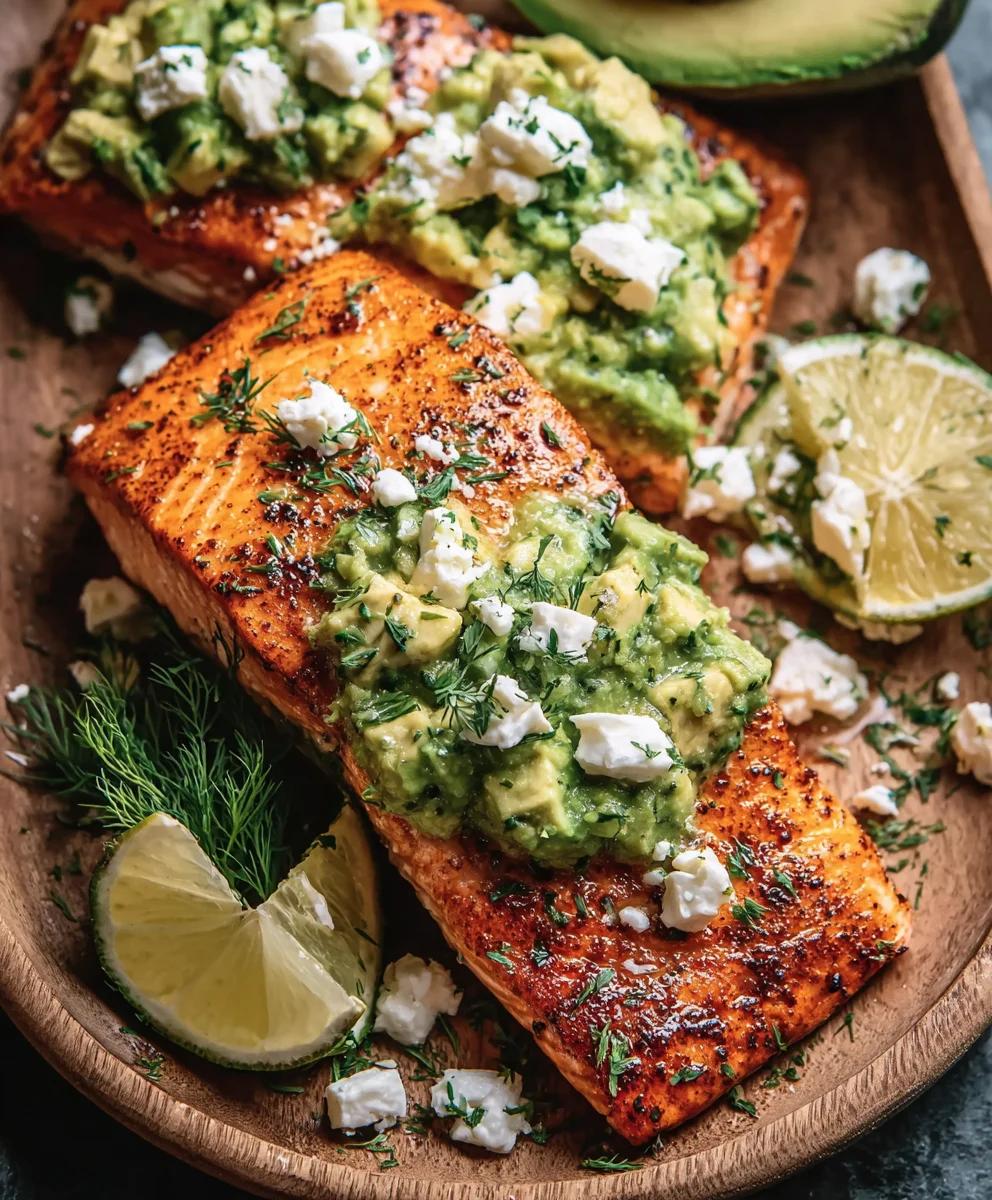
Baked Salmon Avocado Feta – Easy Dinner Recipe
A simple and flavorful recipe for baked salmon topped with a fresh avocado and feta cheese mixture. Perfect for a quick and healthy dinner.
Ingredients
-
4 skinless salmon fillets (about 6 ounces each)
-
2 tablespoons extra virgin olive oil
-
2 tablespoons fresh lemon juice
-
1 teaspoon finely grated lemon zest
-
1 teaspoon fresh dill, finely chopped
-
Salt, to your preference
-
Freshly ground black pepper, to your preference
-
A pinch of paprika
-
1 large ripe avocado, diced into ½-inch pieces
-
⅓ cup crumbled feta cheese
-
1 tablespoon fresh dill, finely chopped (for the topping)
-
1 tablespoon fresh chives, thinly sliced (for the topping)
-
Juice of ½ lemon (for the topping)
-
Salt and freshly ground black pepper, to taste (for the topping)
Instructions
-
Step 1
Preheat your oven to 400°F (200°C). Line a baking sheet with parchment paper or aluminum foil. -
Step 2
In a small bowl, whisk together 2 tablespoons olive oil, 2 tablespoons lemon juice, and 1 teaspoon lemon zest. Stir in 1 teaspoon chopped fresh dill. Season with salt, pepper, and paprika. -
Step 3
Place salmon fillets on the prepared baking sheet. Spoon the marinade evenly over each fillet. Let sit for 10-15 minutes. -
Step 4
Bake salmon for 12-15 minutes, or until opaque and flakes easily with a fork. -
Step 5
While salmon bakes, combine diced avocado, crumbled feta, 1 tablespoon chopped dill, sliced chives, and juice of ½ lemon in a medium bowl. Season with salt and pepper to taste. Toss gently. -
Step 6
Remove salmon from oven. Transfer to serving plates and top generously with the avocado and feta mixture.
Important Information
Nutrition Facts (Per Serving)
It is important to consider this information as approximate and not to use it as definitive health advice.
Allergy Information
Please check ingredients for potential allergens and consult a health professional if in doubt.

Leave a Comment