
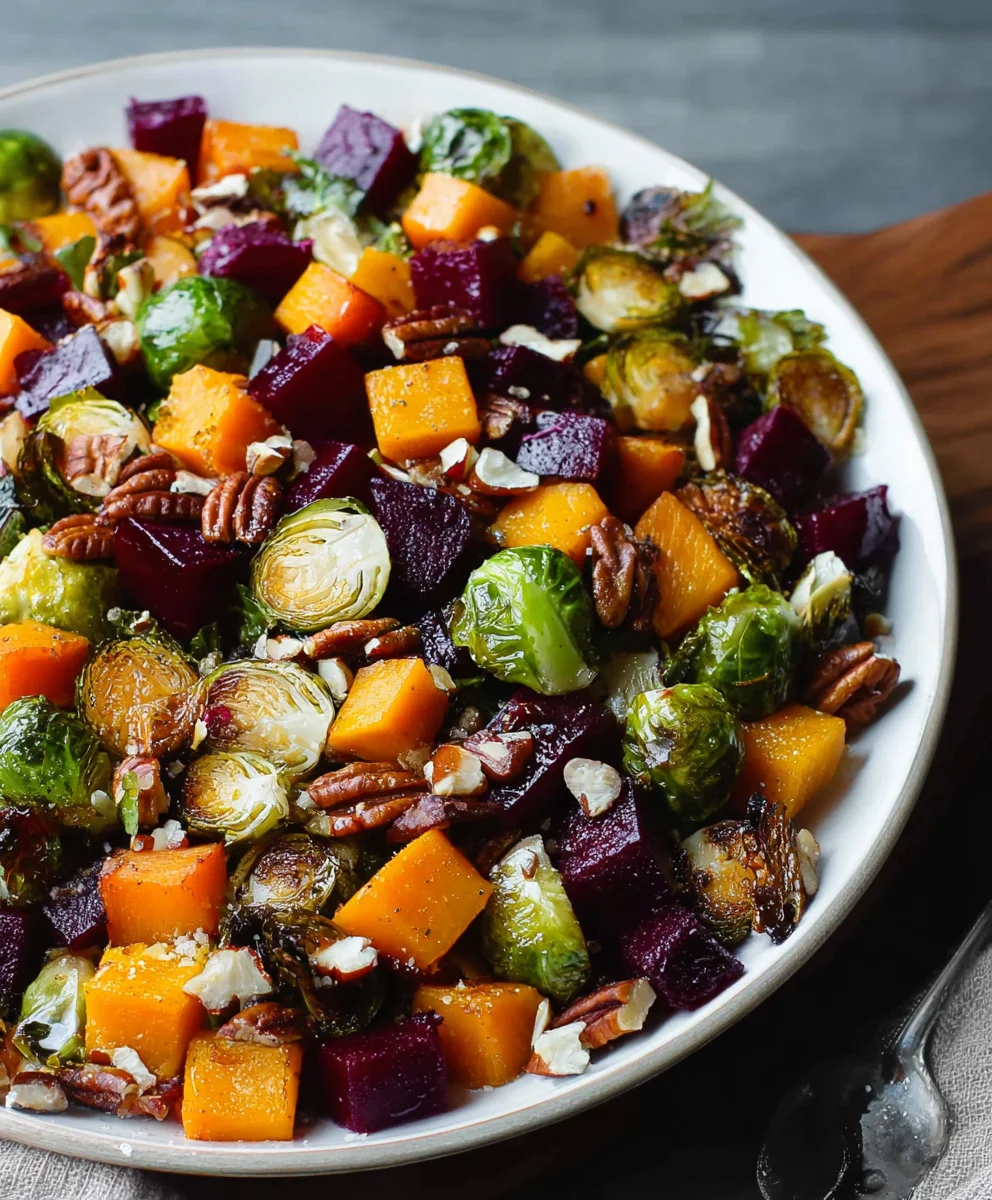
Winter Vegetable Salad with Butternut Squash, Brussels Sprouts, and Beets is more than just a side dish; it’s a vibrant celebration of the season’s bounty. As the days grow shorter and the air turns crisp, our cravings shift towards warm, comforting flavors and hearty textures. This salad delivers precisely that, transforming humble root vegetables and cruciferous greens into a masterpiece of color and taste. People adore this dish because it manages to be both incredibly nourishing and delightfully satisfying, a rare combination that makes it a true standout on any table. What truly elevates this Winter Vegetable Salad with Butternut Squash, Brussels Sprouts, and Beets is the ingenious interplay of sweet, earthy, and slightly nutty notes. The roasted butternut squash brings a comforting sweetness, the Brussels sprouts offer a pleasant bitterness and satisfying chew, and the beets lend their vibrant hue and deep, earthy character. It’s a symphony of textures and flavors that will leave you feeling energized and content, proving that healthy eating can be utterly delicious.

Ingredients:
- 3 cups Brussels sprouts, raw, ends trimmed, yellow leaves removed
- 2 tablespoons olive oil (for roasting vegetables)
- Salt, to taste
- 4 cups butternut squash, uncooked, peeled, seeded, and cubed into 1-inch cubes
- 2 tablespoons olive oil (for roasting vegetables)
- Salt, to taste
- 2 large beets, pre-cooked (see note below for preparation)
- 2 cups pecan halves
- 1 cup dried cranberries
- 1 cup balsamic vinegar
- 1/4 cup honey (or brown sugar)
- 4 tablespoons maple syrup
- 1 tablespoon freshly squeezed lime juice (plus an additional tablespoon, to taste)
Pre-cooking Beets (Important Note):
For the best texture and ease of preparation, I highly recommend pre-cooking your beets at least a day in advance. You can roast them in the oven at 400°F (200°C) wrapped tightly in foil until tender when pierced with a fork, which usually takes about 45-60 minutes depending on size. Once cooked and slightly cooled, you can easily peel them. You can also boil them until tender. Allow them to cool completely before peeling and cubing them into bite-sized pieces, similar in size to your butternut squash cubes.
Roasting the Winter Vegetables
Step 1: Prepare and Roast the Brussels Sprouts
First things first, let’s get these beautiful winter vegetables ready for roasting. Take your trimmed Brussels sprouts and if they are particularly large, I like to halve them so they roast more evenly. In a medium bowl, toss the Brussels sprouts with 1 tablespoon of the olive oil and a generous pinch of salt. Ensure each sprout is lightly coated. Spread them out in a single layer on a baking sheet. It’s crucial to give them space; overcrowding will steam them instead of roasting them, and we want those lovely crispy edges!
Step 2: Roast the Butternut Squash
Now, let’s move on to the butternut squash. In a separate bowl, combine the cubed butternut squash with the remaining 1 tablespoon of olive oil and another pinch of salt. Toss thoroughly to coat all the pieces. Spread the squash in a single layer on another baking sheet, or if your baking sheets are large enough, you can roast them on the same sheet as the Brussels sprouts, just make sure not to overcrowd either vegetable. Roast both the Brussels sprouts and butternut squash in a preheated oven at 400°F (200°C) for about 25-30 minutes. We’re looking for tender vegetables with nicely caramelized, slightly browned edges. They should be fork-tender.
Assembling the Salad Components
Step 3: Prepare the Balsamic Glaze
While the vegetables are roasting, let’s whip up a simple yet flavorful balsamic glaze. In a small saucepan over medium heat, combine the balsamic vinegar, honey (or brown sugar), and maple syrup. Bring this mixture to a gentle simmer. Let it cook, stirring occasionally, for about 8-10 minutes, or until it has reduced by about a third and has thickened to a syrupy consistency. You’re looking for a glaze that coats the back of a spoon. Be careful not to let it burn. Once it reaches the desired consistency, remove it from the heat and let it cool slightly. This glaze will add a wonderful tangy-sweet depth to our salad.
Step 4: Toast the Pecans
To enhance the nutty flavor and add a delightful crunch, let’s toast the pecan halves. You can do this in a dry skillet over medium-low heat for about 3-5 minutes, stirring frequently, until they are fragrant and lightly golden. Alternatively, you can pop them into the oven with the vegetables for the last 5-7 minutes of roasting, keeping a close eye on them to prevent burning. Once toasted, set them aside to cool.
Bringin extractg It All Together
Step 5: Combine and Dress the Salad
Once your roasted Brussels sprouts and butternut squash are tender and slightly caramelized, carefully remove them from the oven. Let them cool for a few minutes until they are comfortable to handle. In a large mixing bowl, combine the roasted Brussels sprouts, roasted butternut squash, the pre-cooked and cubed beets, toasted pecan halves, and dried cranberries. Drizzle about half of the prepared balsamic glaze over the ingredients. Add the 1 tablespoon of freshly squeezed lime juice. Gently toss everything together, ensuring all the components are lightly coated with the glaze and lime juice. Taste the salad and add more lime juice or a little more glaze if you desire a tangier or sweeter profile. You can serve this salad warm, at room temperature, or even chilled – it’s delicious no matter the temperature!
Conclusion:
There you have it – a robust and flavorful Winter Vegetable Salad with Butternut Squash, Brussels Sprouts, and Beets that’s perfect for any occasion. We’ve combined the natural sweetness of roasted butternut squash, the delightful crunch of Brussels sprouts, and the earthy notes of roasted beets to create a truly satisfying and healthy dish. This salad is not only visually appealing with its vibrant colors but also packed with essential nutrients to keep you energized during the colder months. Don’t be afraid to experiment and make it your own!
For serving suggestions, this Winter Vegetable Salad with Butternut Squash, Brussels Sprouts, and Beets is fantastic as a standalone light lunch or a substantial side dish. It pairs wonderfully with grilled chicken, roasted salmon, or a hearty lentil soup. Get creative with variations too! Consider adding toasted walnuts or pecans for extra crunch, crum extractbled goat cheese or feta for a creamy, tangy element, or a sprinkle of dried cranberries for a burst of sweetness. A drizzle of maple-Dijon vinaigrette, as suggested, truly elevates all the flavors.
We hope you enjoy making and sharing this delicious Winter Vegetable Salad with Butternut Squash, Brussels Sprouts, and Beets. It’s a testament to how simple, seasonal ingredients can create something truly special. Happy cooking!
Frequently Asked Questions:
Can I prepare some components of the Winter Vegetable Salad with Butternut Squash, Brussels Sprouts, and Beets in advance?
Absolutely! Roasting the butternut squash, Brussels sprouts, and beets can be done a day ahead. Store them separately in airtight containers in the refrigerator. The vinaigrette can also be made in advance and kept chilled. When ready to serve, simply assemble the salad and toss with the dressing.
What other vegetables can I add to this Winter Vegetable Salad with Butternut Squash, Brussels Sprouts, and Beets?
This salad is quite versatile. Feel free to add roasted sweet potatoes, parsnips, carrots, or even cubes of roasted cauliflower. For a fresh element, thinly sliced red onion or a handful of baby spinach can also be incorporated just before serving.
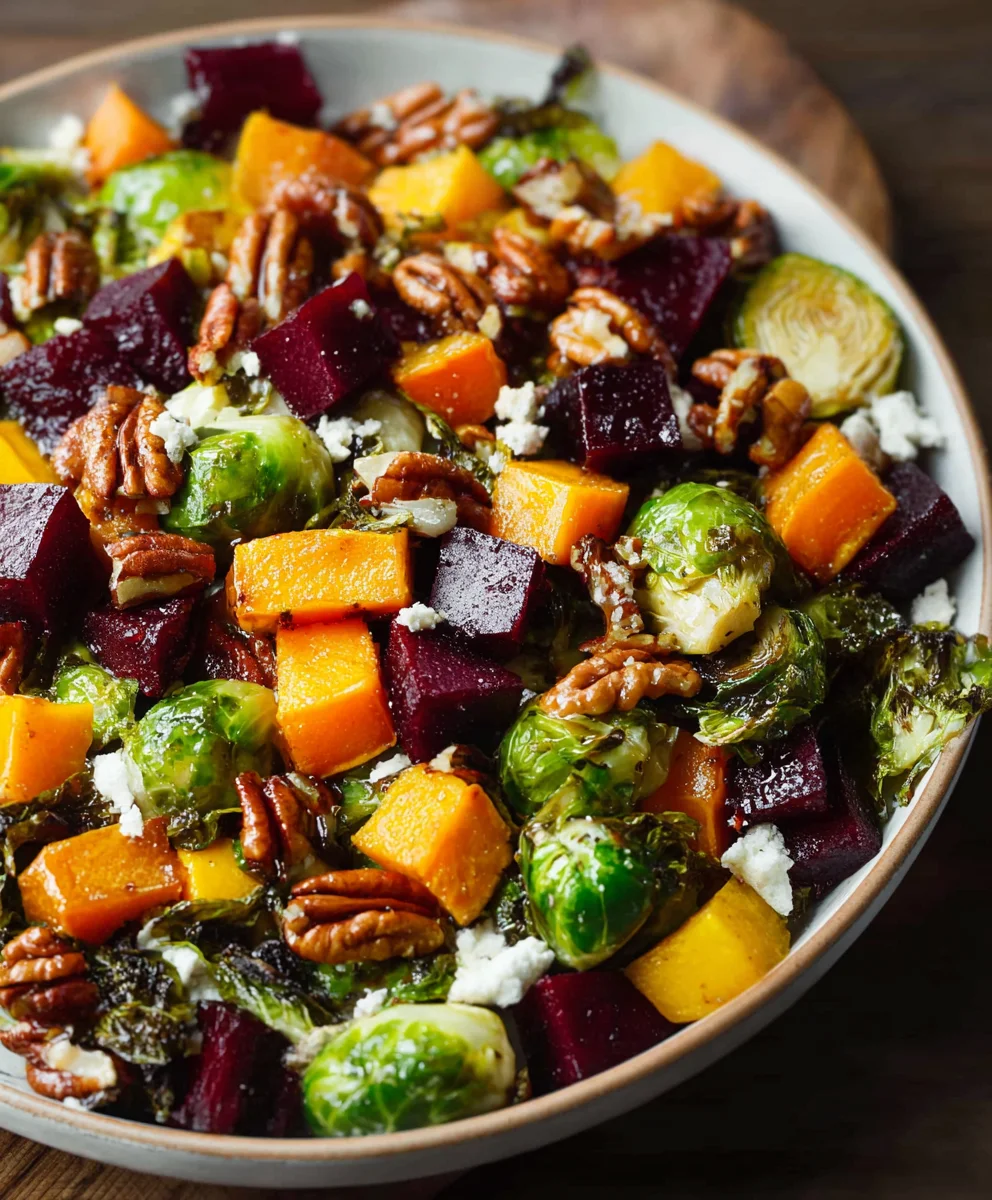
Roasted Winter Vegetable Salad – Butternut Squash Brussels Sprouts
A hearty and flavorful salad featuring roasted butternut squash and Brussels sprouts, complemented by pre-cooked beets, toasted pecans, and dried cranberries, all tossed in a tangy balsamic glaze.
Ingredients
-
3 cups Brussels sprouts, raw, ends trimmed, yellow leaves removed
-
2 tablespoons olive oil
-
salt, to taste
-
4 cups butternut squash, uncooked, peeled, seeded, and cubed into 1-inch cubes
-
2 tablespoons olive oil
-
2 large beets, pre-cooked
-
2 cups pecan halves
-
1 cup dried cranberries
-
1 cup balsamic vinegar
-
1/4 cup honey (or brown sugar)
-
4 tablespoons maple syrup
-
1 tablespoon freshly squeezed lime juice (plus an additional tablespoon, to taste)
Instructions
-
Step 1
Prepare and roast the Brussels sprouts: Trim and halve any large Brussels sprouts. Toss with 1 tablespoon of olive oil and salt in a medium bowl. Spread in a single layer on a baking sheet and roast at 400°F (200°C) for 25-30 minutes until fork-tender with caramelized edges. -
Step 2
Roast the butternut squash: Toss cubed butternut squash with the remaining 1 tablespoon of olive oil and salt in a separate bowl. Spread in a single layer on another baking sheet. Roast at 400°F (200°C) for 25-30 minutes until fork-tender with caramelized edges. You can roast the Brussels sprouts and squash on the same sheet if space allows, ensuring no overcrowding. -
Step 3
Prepare the balsamic glaze: In a small saucepan over medium heat, combine balsamic vinegar, honey (or brown sugar), and maple syrup. Simmer for 8-10 minutes, stirring occasionally, until reduced by about a third and thickened to a syrupy consistency. Remove from heat and let cool slightly. -
Step 4
Toast the pecans: Toast pecan halves in a dry skillet over medium-low heat for 3-5 minutes until fragrant and lightly golden, or add them to the oven for the last 5-7 minutes of vegetable roasting, watching carefully to prevent burning. Set aside to cool. -
Step 5
Combine and dress the salad: In a large mixing bowl, combine the roasted Brussels sprouts, roasted butternut squash, pre-cooked and cubed beets, toasted pecan halves, and dried cranberries. Drizzle about half of the balsamic glaze and 1 tablespoon of lime juice over the ingredients. Gently toss to coat. Taste and adjust with additional lime juice or glaze as desired. Serve warm, at room temperature, or chilled.
Important Information
Nutrition Facts (Per Serving)
It is important to consider this information as approximate and not to use it as definitive health advice.
Allergy Information
Please check ingredients for potential allergens and consult a health professional if in doubt.

Leave a Comment