
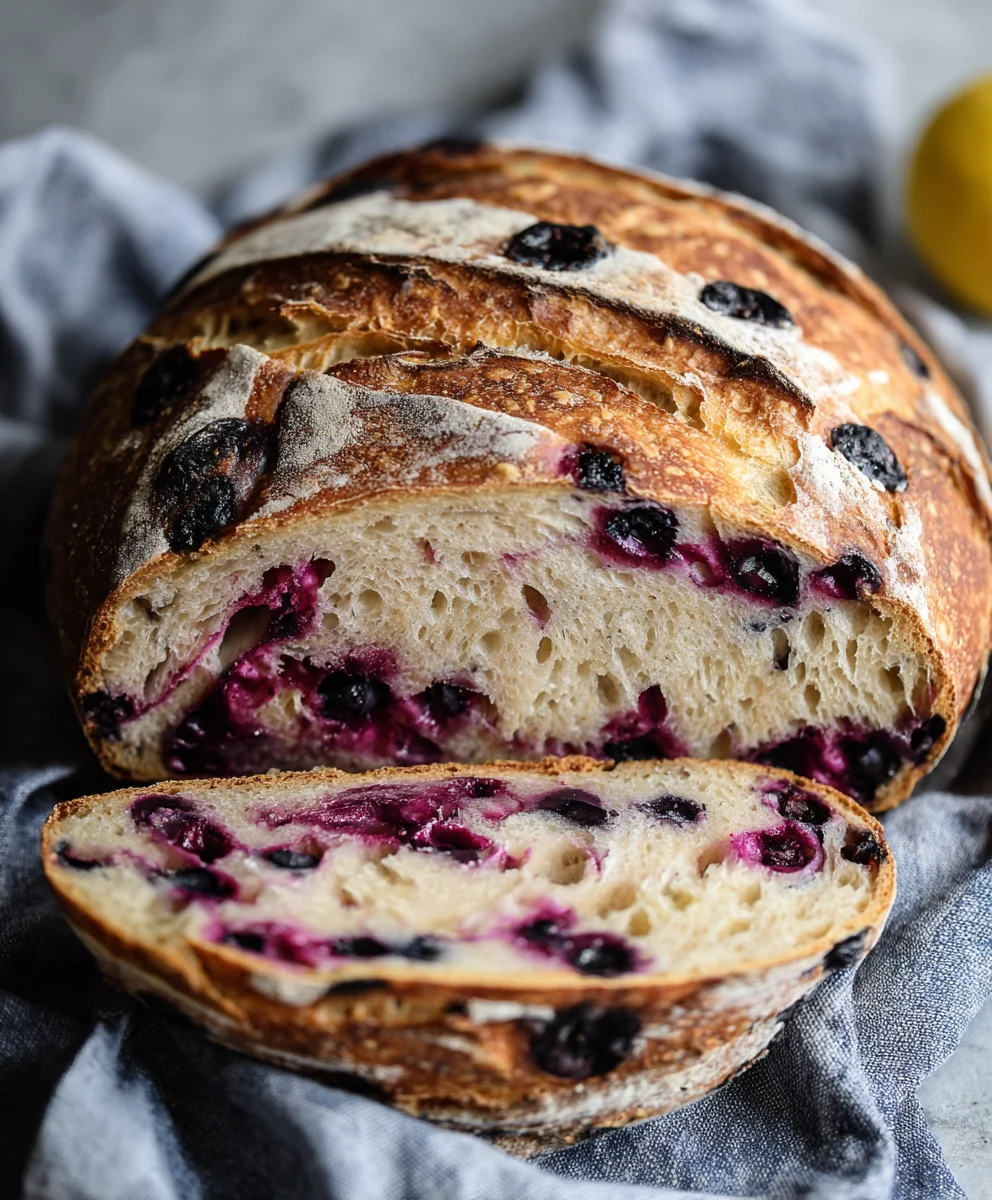
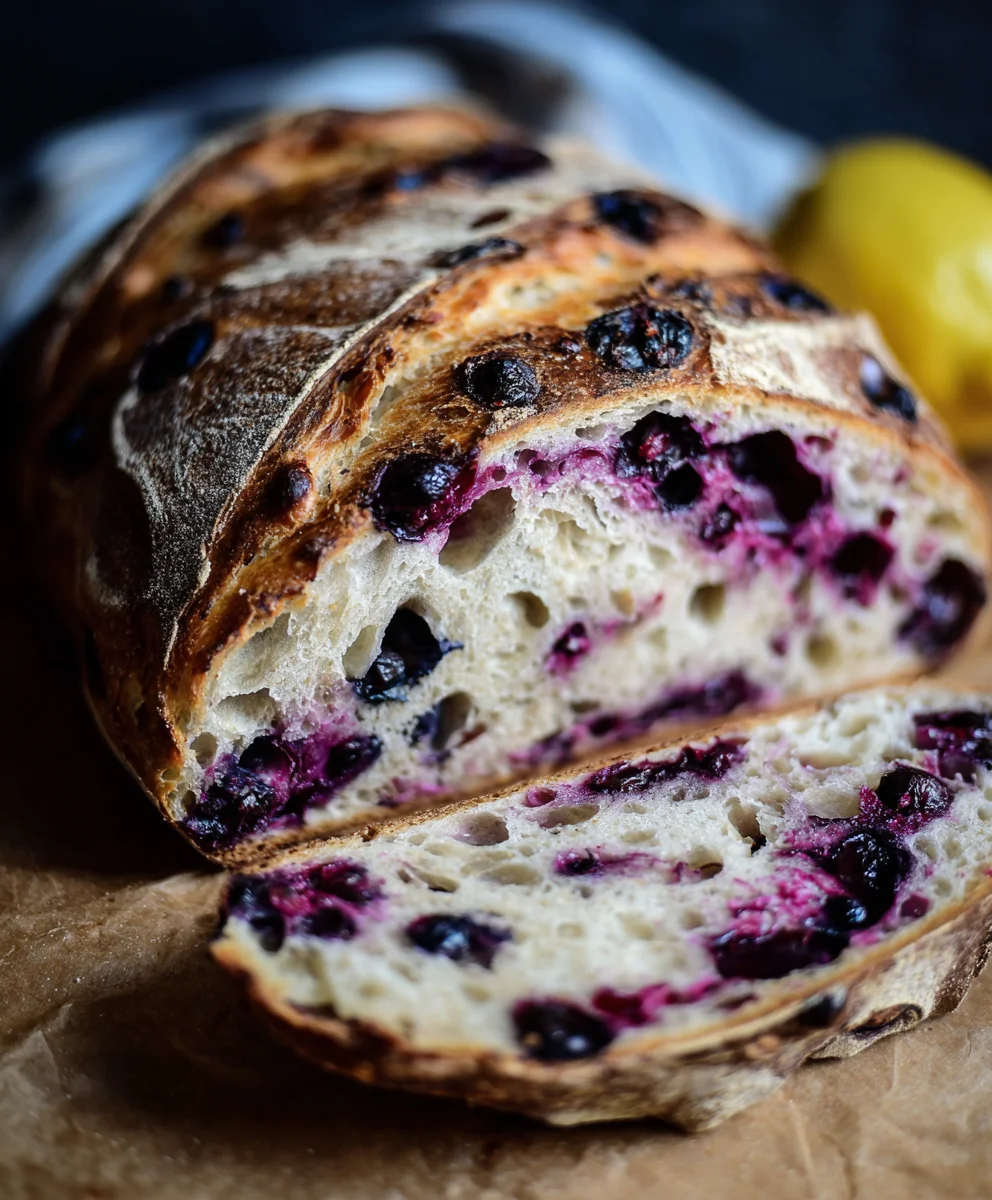
Lemon Blueberry Sourdough Bread Recipe. Oh, the aroma that fills the kitchen when this beauty is baking! If you’re a fan of that delightful tang from a good sourdough starter, combined with the bright, zesty burst of lemon and the sweet, juicy pockets of blueberries, then you’ve come to the right place. This Lemon Blueberry Sourdough Bread Recipe isn’t just a loaf; it’s an experience. People adore it because it masterfully balances the complex flavor profile of sourdough with the comforting, familiar taste of fruit and citrus. What truly sets this bread apart is the perfect harmony it achieves: a delightfully chewy, airy crum extractb thanks to the sourdough fermentation, studded with vibrant blueberries that pop in every bite, and the subtle, uplifting fragrance of fresh lemon zest woven throughout. It’s the ideal treat for breakfast, a delightful afternoon snack, or even a sophisticated dessert. Get ready to impress yourself and everyone lucky enough to share a slice!

Ingredients:
- 50g active sourdough starter
- 350g water
- 500g bread flour
- 11g salt
- 150g fresh blueberries
- Zest of one large lemon
- 8 Tablespoons (113g) butter, softened to room temperature
- 1/2 cup (75g) fresh blueberries, mashed
- 2 Tablespoons (45g) honey
- A pinch of salt
Preparing the Dough
Mixing the Dough
- In a large mixing bowl, combine your 50g of active sourdough starter with 350g of lukewarm water. Gently whisk them together until the starter is mostly dispersed in the water. This is your “levain” or “preferment.” Ensure your sourdough starter is active and bubbly, meaning it’s been fed recently and has doubled in size within a few hours. This is crucial for a good rise and flavor development in your bread.
- Next, add 500g of bread flour to the bowl. Use bread flour as it has a higher protein content, which is essential for developing a strong gluten structure that will give your sourdough its characteristic chewy texture and open crum extractb. Add 11g of fine sea salt. The salt not only adds flavor but also controls the yeast activity and strengthens the gluten.
- Using your hands or a sturdy spatula, mix everything until a shaggy dough forms. It will look messy and uneven at this stage, and that’s perfectly fine. Don’t overmix at this point. The goal is simply to hydrate the flour and bring the ingredients together. Cover the bowl with a damp kitchen towel or plastic wrap and let it rest for about 30 minutes. This resting period, known as autolyse, allows the flour to fully absorb the water, initiating gluten development and making the dough easier to handle.
Developing the Dough
Stretch and Folds
- After the 30-minute rest, it’s time to start the stretch and fold process. This technique develops the gluten network without kneading, which is a gentler approach for sourdough. With damp hands, reach into the bowl and grab a portion of the dough from one side. Stretch it upwards gently, as far as it will go without tearing, and then fold it over onto itself towards the center of the bowl. Rotate the bowl a quarter turn and repeat this stretching and folding motion four times in total, working your way around the dough. You’ll feel the dough start to become more cohesive and elastic with each set of folds.
- Cover the bowl again and let it rest for another 30 minutes. Repeat the stretch and fold process three more times, with 30-minute rests in between each set. This means you’ll perform a total of four sets of stretch and folds over a period of about two hours. You’ll notice the dough becoming smoother, stronger, and more elastic with each subsequent set. It will start to pull away cleanly from the sides of the bowl, and when you gently stretch a piece of it, it should form a thin, translucent membrane without tearing easily (the “windowpane test”).
Adding Flavor and Shaping
Inclusions and Shaping
- Once your dough has completed its stretch and folds and has passed the windowpane test, it’s time to incorporate the lemon zest and blueberries. Gently spread the dough out on a lightly floured surface. Sprinkle the zest of one large lemon evenly over the surface of the dough. The citrus aroma will begin extract to awaken. Then, scatter 150g of fresh blueberries over the zest. Try to distribute them as evenly as possible to ensure a burst of fruity flavor in every slice.
- Now, carefully fold the dough over the blueberries and lemon zest. You can do this by gently folding one edge over, then the opposite edge, and finally the remaining two sides, creating a rough package. Once the inclusions are mostly enclosed, gently shape the dough into a ball or a rough round. Avoid pressing too hard, as you don’t want to deflate the air bubbles you’ve worked so hard to create. If the dough feels sticky, lightly dust your hands with flour, but try to use as little as possible to maintain the dough’s hydration.
- Prepare a banneton or a bowl lined with a well-floured tea towel. Carefully transfer the shaped dough into the prepared banneton or bowl, seam-side down. Cover the banneton or bowl with plastic wrap or a damp cloth. Place it in the refrigerator for a cold proof for at least 8 hours, or preferably overnight (up to 24 hours). This cold fermentation is where much of the sourdough flavor develops and also makes the dough easier to score and handle when it’s cold.
Baking the Bread
Baking Instructions
- About 30 minutes before you plan to bake, preheat your oven to 475°F (245°C) with a Dutch oven or a baking stone inside. If using a Dutch oven, place it in the oven as it preheats. This extreme heat is crucial for achieving a good oven spring and a crispy crust.
- Once the oven is fully preheated and the dough has completed its cold proof, carefully turn the dough out of the banneton or bowl onto a piece of parchment paper. The dough should be well-risen and firm. Using a sharp razor blade or a lame, score the top of the dough. A simple slash or a more decorative pattern will help control where the bread expands during baking.
- Carefully remove the hot Dutch oven from the oven (or place the dough onto the preheated baking stone). If using a Dutch oven, carefully place the dough (still on the parchment paper) into the hot Dutch oven, cover it with the lid, and place it back into the oven. If using a baking stone, carefully slide the dough on the parchment paper onto the hot stone. Bake covered for 20 minutes.
- After 20 minutes, carefully remove the lid from the Dutch oven (or if using a baking stone, you can slide the parchment paper out from under the loaf, if possible, for the final browning). Reduce the oven temperature to 450°F (230°C) and continue to bake for another 20-25 minutes, or until the crust is a deep golden brown and the internal temperature of the bread reaches at least 205°F (96°C). The aroma of lemon and blueberry will fill your kitchen.
- Once baked to perfection, carefully remove the bread from the oven and transfer it to a wire rack to cool completely. Resist the temptation to slice into it too soon! Letting it cool allows the internal structure to set and prevents a gummy texture. While the bread is cooling, you can prepare a delicious lemon-blueberry butter. In a small bowl, cream together 8 tablespoons (113g) of softened butter with 1/2 cup (75g) of mashed fresh blueberries, 2 tablespoons (45g) of honey, and a pinch of salt. Mix until well combined and spreadable. Serve slices of your warm sourdough bread with this delightful lemon-blueberry butter for an extra treat.
Conclusion:
There you have it – the delightful and surprisingly simple Lemon Blueberry Sourdough Bread Recipe! We’ve walked through creating this beautiful loaf, from nurturing your starter to achieving that perfect golden crust. The tangy sourdough base beautifully complements the bright bursts of lemon zest and sweet blueberries, making this bread a true showstopper. It’s perfect for a special brunch, a comforting afternoon treat, or simply to impress your friends and family with your baking prowess.
For serving, I love a thick slice lightly toasted and spread with a dollop of cream cheese or a drizzle of honey. It also pairs wonderfully with a cup of strong coffee or a refreshing glass of iced tea. Don’t be afraid to experiment with variations! Consider adding a sprinkle of poppy seeds to the dough for an extra pop of flavor and texture, or swap the blueberries for raspberries for a slightly tarter twist. You can even incorporate a touch of lavender for a more sophisticated aroma. Embrace the sourdough journey and enjoy the incredible results of your hard work with this Lemon Blueberry Sourdough Bread Recipe. Happy baking!
Frequently Asked Questions:
Can I use frozen blueberries in this recipe?
Yes, you absolutely can use frozen blueberries! It’s best to toss them with a tablespoon of flour before adding them to the dough to help prevent them from bleeding too much color. You don’t need to thaw them beforehand.
What if my sourdough starter isn’t very active?
A sluggish starter might require a few more feeding cycles to become vigorous enough for this recipe. Ensure you’re feeding it regularly with equal parts flour and water (by weight) and keeping it in a warm environment. A strong starter is key to a good rise and complex flavor in your Lemon Blueberry Sourdough Bread Recipe.
Lemon Blueberry Sourdough Bread
An easy recipe for delicious and tangy lemon blueberry sourdough bread, perfect for any occasion.
Ingredients
-
50g active sourdough starter
-
350g water
-
500g bread flour
-
11g salt
-
150g fresh blueberries
-
Zest of one large lemon
-
8 Tablespoons (113g) butter, softened to room temperature
-
1/2 cup (75g) fresh blueberries, mashed
-
2 Tablespoons (45g) honey
-
A pinch of salt
Instructions
-
Step 1
Combine active sourdough starter with lukewarm water in a large bowl to create the levain. Let it rest for 30 minutes (autolyse) after adding bread flour and salt, mixing until shaggy. -
Step 2
Perform stretch and folds on the dough every 30 minutes for a total of four sets over two hours. The dough should become smooth, elastic, and pass the windowpane test. -
Step 3
Gently incorporate lemon zest and 150g of fresh blueberries into the dough. Shape into a ball or rough round and place seam-side down into a floured banneton or bowl. Cover and refrigerate for at least 8 hours for cold proofing. -
Step 4
Preheat oven to 475°F (245°C) with a Dutch oven or baking stone inside. Turn dough onto parchment paper, score the top, and carefully place into the hot Dutch oven (covered) or onto the baking stone. Bake covered for 20 minutes. -
Step 5
Remove the lid of the Dutch oven, reduce oven temperature to 450°F (230°C), and bake for an additional 20-25 minutes until deep golden brown. Cool completely on a wire rack before slicing. Prepare lemon-blueberry butter by creaming softened butter with mashed blueberries, honey, and a pinch of salt.
Important Information
Nutrition Facts (Per Serving)
It is important to consider this information as approximate and not to use it as definitive health advice.
Allergy Information
Please check ingredients for potential allergens and consult a health professional if in doubt.




Leave a Comment