
Japchae
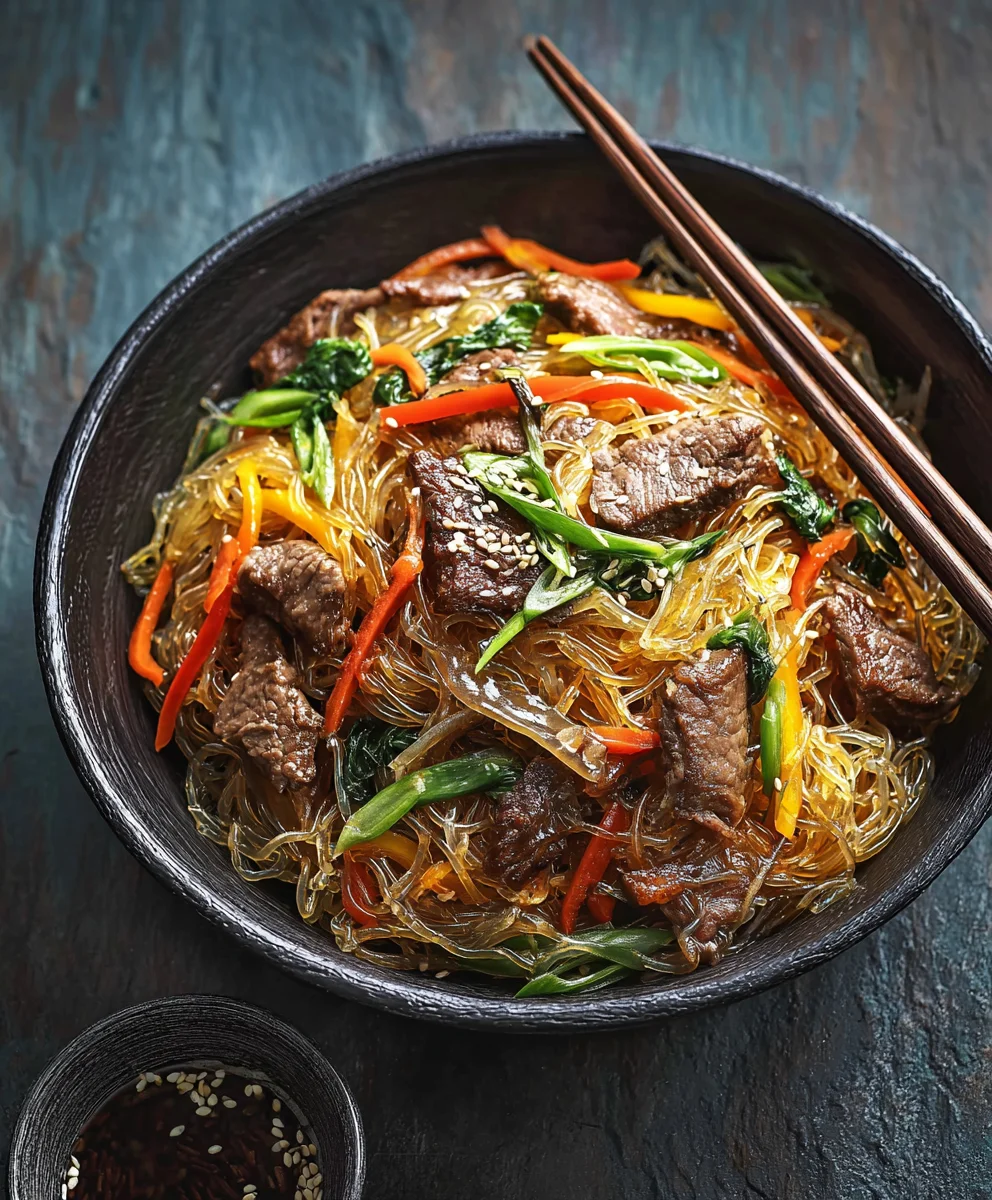
is one of those dishes that feels like a warm hug in a bowl, a culinary masterpiece that dances on your palate with a symphony of textures and flavors. It’s a vibrant Korean noodle stir-fry, and it’s no wonder why so many people fall head over heels for it. The magic of Japchae lies in its beautiful balance: the chewy sweetness of the glass noodles, the crisp freshness of assorted vegetables like bell peppers and spinach, and the savory depth of marinated beef or mushrooms. Each bite offers a delightful contrast, making it incredibly satisfying and addictive. What truly sets this dish apart is its inherent versatility and its ability to be both a comforting weeknight meal and an elegant dish for special gatherings. The glistening, slightly sweet soy-based sauce coats every strand of noodle and every sliver of vegetable, creating a harmonious and utterly delicious experience that keeps you coming back for more. Get ready to unlock the secrets to making this beloved Korean classic right in your own kitchen.

Ingredients:
- 2 lb thin-sliced beef (or sub with chicken, tofu, or shrimp)
- 1 lb Korean sweet potato noodles (glass noodles)
- 3 medium carrots, julienned
- 1 large white onion, thinly sliced
- 1/2 bunch green onions, chopped
- 6 garlic cloves, minced
- 1/2 lb spinach leaves
- 4 tbsp sesame oil (divided)
- 1 tbsp olive oil
- 6 tbsp soy sauce (or tamari for gluten-free)
- 3 tbsp brown sugar
Preparation of Components
Marinating the Beef
Begin extract by preparing your protein. If you’re using the beef, ensure it’s thinly sliced, which is ideal for quick cooking and absorbing marinade. In a medium bowl, combine the thinly sliced beef with 2 tablespoons of soy sauce and 1 tablespoon of brown sugar. Mix well to ensure each piece of beef is coated. Add about 1 teaspoon of minced garlic to the marinade. Let this sit for at least 15-20 minutes at room temperature while you prepare the vegetables. This resting period allows the flavors to meld beautifully and tenderizes the meat. If you opt for chicken, tofu, or shrimp, adjust marinating times accordingly; chicken and shrimp benefit from a similar marinating time, while tofu might need a slightly longer soak if you want a deeper flavor infusion.
Noodle Preparation
The star of our Japchae are the Korean sweet potato noodles, also known as glass noodles or dangmyeon. These noodles have a wonderful chewy texture and absorb sauces exceptionally well. Bring a large pot of water to a rolling boil. Carefully add the dried sweet potato noodles to the boiling water and cook according to package directions, typically for about 6-8 minutes. You want them to be tender but still have a slight bite – al dente is key here to prevent them from becoming mushy. Once cooked, drain the noodles thoroughly in a colander. Immediately rinse them under cold running water to stop the cooking process and prevent them from sticking together. It’s also a good idea to toss them with 1 tablespoon of sesame oil. This simple step will keep them separated and add a subtle nutty aroma.
Vegetable Sautéing
Now, let’s get to the vibrant medley of vegetables. Heat the olive oil in a large wok or a wide, deep skillet over medium-high heat. Add the thinly sliced white onion and sauté untgin extractit begins to soften and turn translucent, about 3-5 minutes. Next, add the julienned carrots and the remaining minced garlic. Stir-fry for another 3-4 minutes until the carrots are tender-crisp. You want them to retain a slight crunch, as they will continue to cook slightly when combined with the other ingredients. Season lightly with a pinch of salt and pepper if desired. Remove the onion and carrot mixture from the wok and set aside in a bowl.
Cooking the Spinach and Beef
In the same wok, add the spinach leaves. Stir-fry them for just 1-2 minutes, or until they are wilted and vibrant green. Spinach cooks very quickly, so be mindful not to overcook it. Remove the spinach from the wok and set it aside with the other vegetables. Now, it’s time to cook the marinated beef. If your wok has any residual liquid, you can wipe it clean or add a fresh tablespoon of olive oil. Add the marinated beef in a single layer, ensuring not to overcrowd the pan. Cook for 3-4 minutes per side, or until it’s browned and cooked through. If you’re using chicken or shrimp, adjust cooking times. For tofu, you would sear it until golden brown. Once cooked, remove the beef from the wok and set it aside.
Assembling the Japchae
This is where all the magic comes together. In a large mixing bowl, combine the cooked and drained sweet potato noodles with the sautéed vegetables (onions, carrots), wilted spinach, and cooked beef. In a small bowl, whisk together the remaining 4 tablespoons of soy sauce, 2 tablespoons of brown sugar, and the remaining 3 tablespoons of sesame oil. Pour this sauce over the noodle and vegetable mixture. Add the chopped green onions to the bowl. Gently toss everything together using tongs or your hands, ensuring that the noodles and all the ingredients are evenly coated with the delicious sauce. Continue to toss until the flavors are well distributed and the noodles have absorbed the sauce. Taste and adjust seasoning as needed. You might want a touch more soy sauce for saltiness or brown sugar for sweetness.
Serving and Enjoying
Serve the Japchae immediately while it’s still warm. The combination of textures and flavors is truly remarkable. The chewy noodles, tender beef, crisp vegetables, and savory-sweet sauce create a harmonious dish that’s both satisfying and visually appealing. Garnish with a sprinkle of toasted sesame seeds if you have them on hand for an extra nutty crunch and visual appeal. This dish is fantastic on its own as a main course, or it can be served as a side dish alongside other Korean specialties. Enjoy the delightful experience of making and eating your own homemade Japchae!
Conclusion:
You’ve now mastered the art of creating delicious Japchae! This delightful Korean noodle dish, with its vibrant colors and symphony of textures, is perfect for any occasion, from a casual weeknight dinner to a festive gathering. We’ve covered the essential steps, from prepping the glass noodles to stir-frying the vegetables and protein, ensuring you achieve that signature savory and slightly sweet flavor profile.
Serving Suggestions: Japchae shines on its own as a hearty main course, but it also makes an excellent side dish. Consider pairing it with Korean BBQ, grilled meats, or even just a simple bowl of rice. The beautiful presentation also makes it ideal for potlucks and family celebrations.
Variations: Don’t be afraid to get creative! You can easily adapt this Japchae recipe to suit your preferences. Add your favorite protein like thinly sliced beef, chicken, or even firm tofu for a vegetarian option. Explore different vegetables such as shiitake mushrooms, snow peas, or baby corn. For an extra kick, a pinch of red pepper flakes can be added during the stir-frying process.
We encourage you to give this Japchae a try. With a little practice, you’ll be whipping up this classic Korean delight like a pro. Enjoy the process and savor the fantastic results!
Frequently Asked Questions about Japchae:
Q1: Can Japchae be made ahead of time?
Yes, Japchae can be made ahead of time. It’s best to prepare all the components separately and then gently combine and toss them together just before serving, or at most a few hours in advance. This helps to prevent the noodles from becoming too sticky or mushy. If you need to reheat it, a quick stir-fry in a lightly oiled pan or a short stint in the microwave should do the trick.
Q2: What kind of noodles are used in Japchae?
Japchae traditionally uses Korean sweet potato starch noodles, also known as dangmyeon. These noodles are translucent, chewy, and absorb the flavors of the sauce beautifully. They are made from sweet potato starch, giving them a unique texture that differentiates them from other types of noodles.
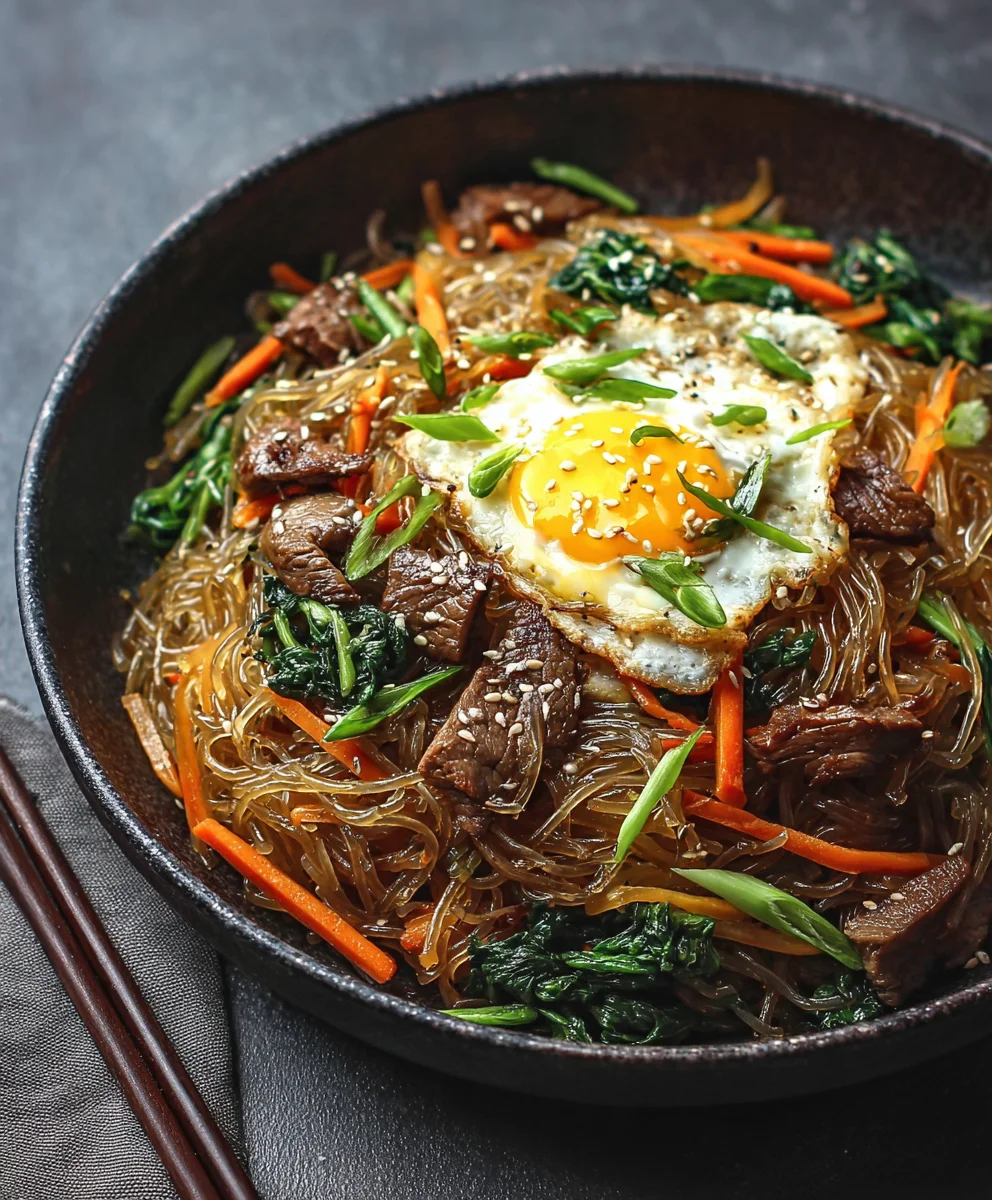
Easy Japchae- Delicious Korean Stir-Fried Noodles
A delightful and relatively easy recipe for authentic Korean Japchae, featuring chewy sweet potato noodles, tender beef, and a medley of colorful vegetables tossed in a savory-sweet sauce.
Ingredients
-
2 lb thin-sliced beef
-
1 lb Korean sweet potato noodles (glass noodles)
-
3 medium carrots, julienned
-
1 large white onion, thinly sliced
-
1/2 bunch green onions, chopped
-
6 garlic cloves, minced
-
1/2 lb spinach leaves
-
4 tbsp sesame oil (divided)
-
1 tbsp olive oil
-
6 tbsp soy sauce (or tamari for gluten-free)
-
3 tbsp brown sugar
Instructions
-
Step 1
Marinate the beef: In a medium bowl, combine thinly sliced beef with 2 tablespoons soy sauce, 1 tablespoon brown sugar, and 1 teaspoon minced garlic. Mix well and let sit for 15-20 minutes at room temperature. -
Step 2
Prepare the noodles: Cook dried sweet potato noodles in boiling water according to package directions (about 6-8 minutes until al dente). Drain, rinse under cold water, and toss with 1 tablespoon sesame oil to prevent sticking. -
Step 3
Sauté vegetables: Heat olive oil in a wok or large skillet over medium-high heat. Sauté sliced onion until translucent (3-5 minutes). Add julienned carrots and remaining minced garlic. Stir-fry for 3-4 minutes until tender-crisp. Remove and set aside. -
Step 4
Cook spinach and beef: In the same wok, stir-fry spinach until wilted (1-2 minutes). Remove and set aside. Add marinated beef to the wok in a single layer, cook for 3-4 minutes per side until browned and cooked through. Remove and set aside. -
Step 5
Assemble the Japchae: In a large bowl, combine cooked noodles, sautéed vegetables, spinach, and cooked beef. In a small bowl, whisk together remaining 4 tablespoons soy sauce, 2 tablespoons brown sugar, and remaining 3 tablespoons sesame oil. Pour sauce over the mixture. Add chopped green onions and gently toss until everything is evenly coated.
Important Information
Nutrition Facts (Per Serving)
It is important to consider this information as approximate and not to use it as definitive health advice.
Allergy Information
Please check ingredients for potential allergens and consult a health professional if in doubt.




Leave a Comment