
Baked Cod in Coconut Lemon Cream Sauce is a dish that whispers of tropical getaways and promises pure comfort. We all crave those meals that feel both incredibly indulgent and surprisingly healthy, and this recipe delivers exactly that. It’s no wonder this particular preparation of cod has become a cherished favorite for so many. The flaky, tender cod, gently baked to perfection, serves as the ideal canvas for a sauce that is both bright and luxurious. What truly sets this Baked Cod in Coconut Lemon Cream Sauce apart is the harmonious interplay of flavors. The creamy richness of coconut milk is expertly balanced by the zesty tang of fresh lemon, creating a sauce that’s vibrant and deeply satisfying without being heavy. It’s a dish that’s as simple to prepare as it is delightful to eat, making it perfect for a weeknight treat or an elegant dinner party.
Why You’ll Love This Recipe
This recipe is a winner for a multitude of reasons. First and foremost, it’s incredibly flavorful. The combination of succulent cod and that luscious sauce is simply irresistible. It’s a lighter take on a creamy seafood dish, using coconut milk instead of heavy cream, which makes it a fantastic option for those watching their intake but still craving something special. The subtle sweetness of the coconut milk complements the oceanic brine of the cod beautifully, while the lemon adds a much-needed brightness that cuts through the richness. Imagin extracte: tender fish bathed in a velvety, aromatic sauce that sings with citrus notes. It’s a taste of sunshine on a plate, a dish that feels both exotic and familiar, comforting and exciting all at once. Plus, it comes together remarkably quickly, meaning you can enjoy this culinary delight without spending hours in the kitchen.
What Makes This Dish So Special
The magic of this Baked Cod in Coconut Lemon Cream Sauce lies in its elegant simplicity and the sophisticated flavor profile it achieves. It transforms humble cod into something truly extraordinary. The coconut milk doesn’t just add creaminess; it infuses the entire dish with a subtle, sweet, tropical essence that is both unique and comforting. When paired with the sharp, clean zest of fresh lemon, it creates a dynamic flavor contrast that keeps your taste buds engaged. The addition of garlic and perhaps a gin extractt of ginger (depending on your preference, which we’ll explore!) adds aromatic depth, creating a sauce that is wonderfully complex yet perfectly balanced. This isn’t just food; it’s an experience – a dish that transports you and leaves you feeling utterly content.

Ingredients:
- 4 cod fillets (approximately 6 ounces each)
- 1 teaspoon salt
- ½ teaspoon black pepper
- ½ teaspoon paprika
- 1 tablespoon olive oil
- 1 cup full-fat coconut milk
- 2 tablespoons fresh lemon juice
- 1 teaspoon lemon zest
- 2 cloves garlic, minced
- 1 teaspoon Dijon mustard
- ½ teaspoon ground cumin
- ½ teaspoon turmeric (optional, for color and warmth)
- ½ teaspoon red pepper flakes (optional, for heat)
- 1 tablespoon fresh parsley, chopped (for garnish)
Preparing the Cod
Seasoning the Fillets
Before we dive into creating that luscious sauce, let’s get our cod fillets ready for their flavor bath. Pat your cod fillets completely dry with paper towels. This is a crucial step for achieving a nice, even sear (if you choose to sear them first, which is optional but recommended for extra texture) and helps the seasonings adhere better. In a small bowl, combine the salt, black pepper, and paprika. Sprinkle this seasoning mixture evenly over both sides of each cod fillet. Gently press the seasonings into the fish to ensure they stick. Set the seasoned fillets aside while you begin extract crafting the sauce. This simple seasoning provides a wonderful base of flavor that will complement the creamy sauce beautifully.
Making the Coconut Lemon Cream Sauce
Building the Flavor Base
Now, let’s get started on the star of our dish – the rich and tangy coconut lemon cream sauce. Heat the olive oil in a large oven-safe skillet over medium heat. Once the oil is shimmering, add the minced garlic and sauté for about 1 minute, or until it becomes fragrant. Be careful not to burn the garlic, as this can impart a bitter taste to your sauce. Immediately after the garlic, stir in the Dijon mustard, ground cumin, turmeric (if using), and red pepper flakes (if using). Cook for another 30 seconds, stirring constantly, until the spices are fragrant. This brief toasting of the spices helps to unlock their full flavor potential.
Creating the Creamy Sauce
Pour in the full-fat coconut milk and bring the mixture to a gentle simmer. Whisk well to combine the spices and garlic into the coconut milk. Continue to simmer gently for about 3-5 minutes, allowing the sauce to thicken slightly. The low simmer is key here; we don’t want to boil the coconut milk vigorously, as it can sometimes separate. The sauce will continue to thicken as it cooks. Next, stir in the fresh lemon juice and lemon zest. The lemon adds a bright, zesty counterpoint to the richness of the coconut milk, creating a perfectly balanced sauce. Taste the sauce at this point and adjust seasonings if needed. You might want a little more salt or pepper, depending on your preference.
Baking the Cod
Adding the Cod to the Sauce
Gently nestle the seasoned cod fillets into the simmering coconut lemon cream sauce. Ensure that each fillet is partially submerged in the sauce. The sauce will continue to cook the fish from below while the oven bakes it from above, ensuring tender and flaky results. If your skillet is not oven-safe, you can transfer the sauce to a baking dish at this point and then add the cod fillets.
Oven Baking for Perfection
Preheat your oven to 400°F (200°C). Once the oven is preheated and the cod is in the skillet with the sauce, carefully transfer the skillet to the preheated oven. Bake for 12-15 minutes, or until the cod is opaque and flakes easily with a fork. The exact baking time will depend on the thickness of your cod fillets. You’ll know it’s done when the fish is no longer translucent in the center. Keep an eye on it to prevent overcooking, which can make the cod dry.
Finishing and Serving
Garnishing for Freshness
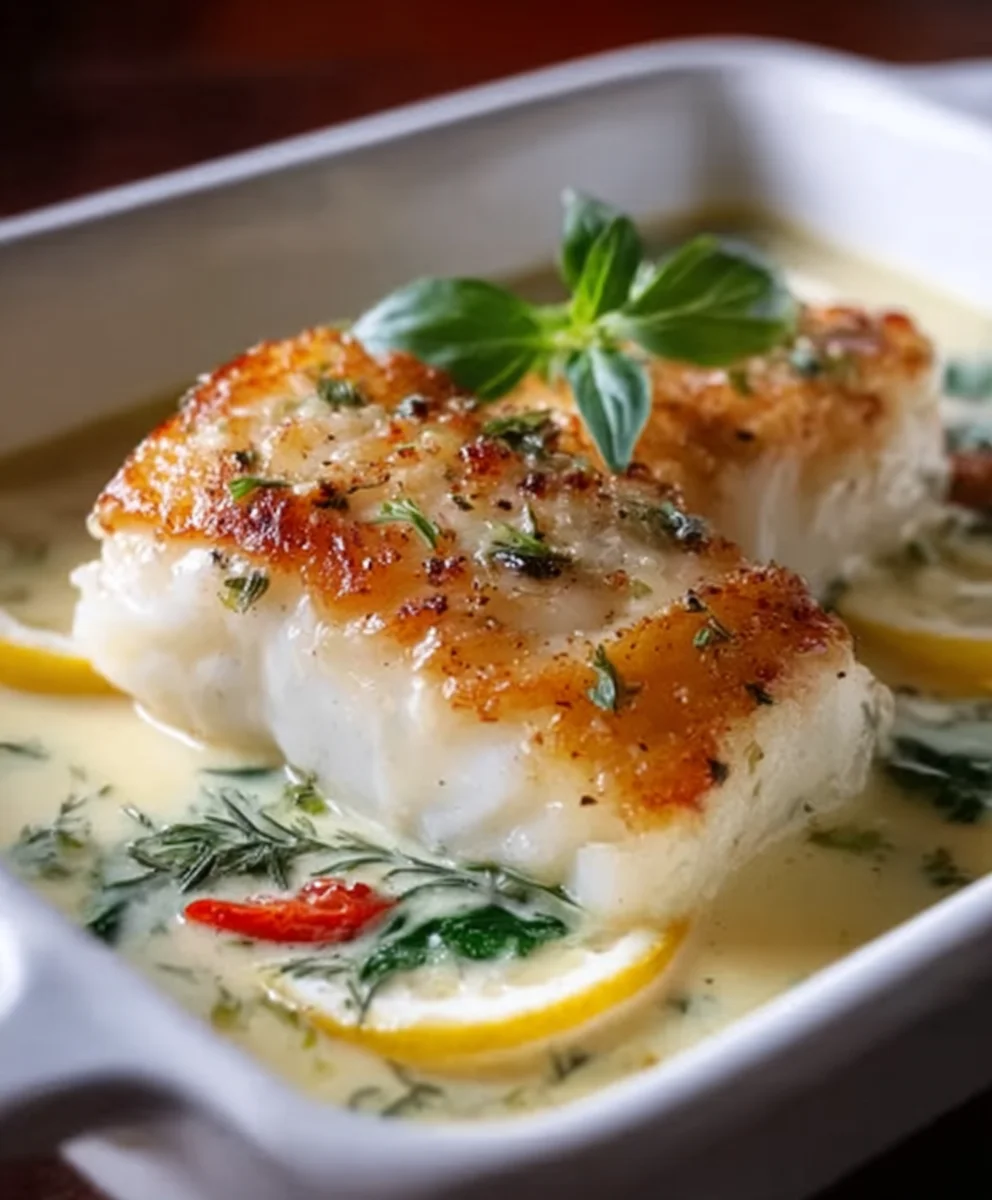
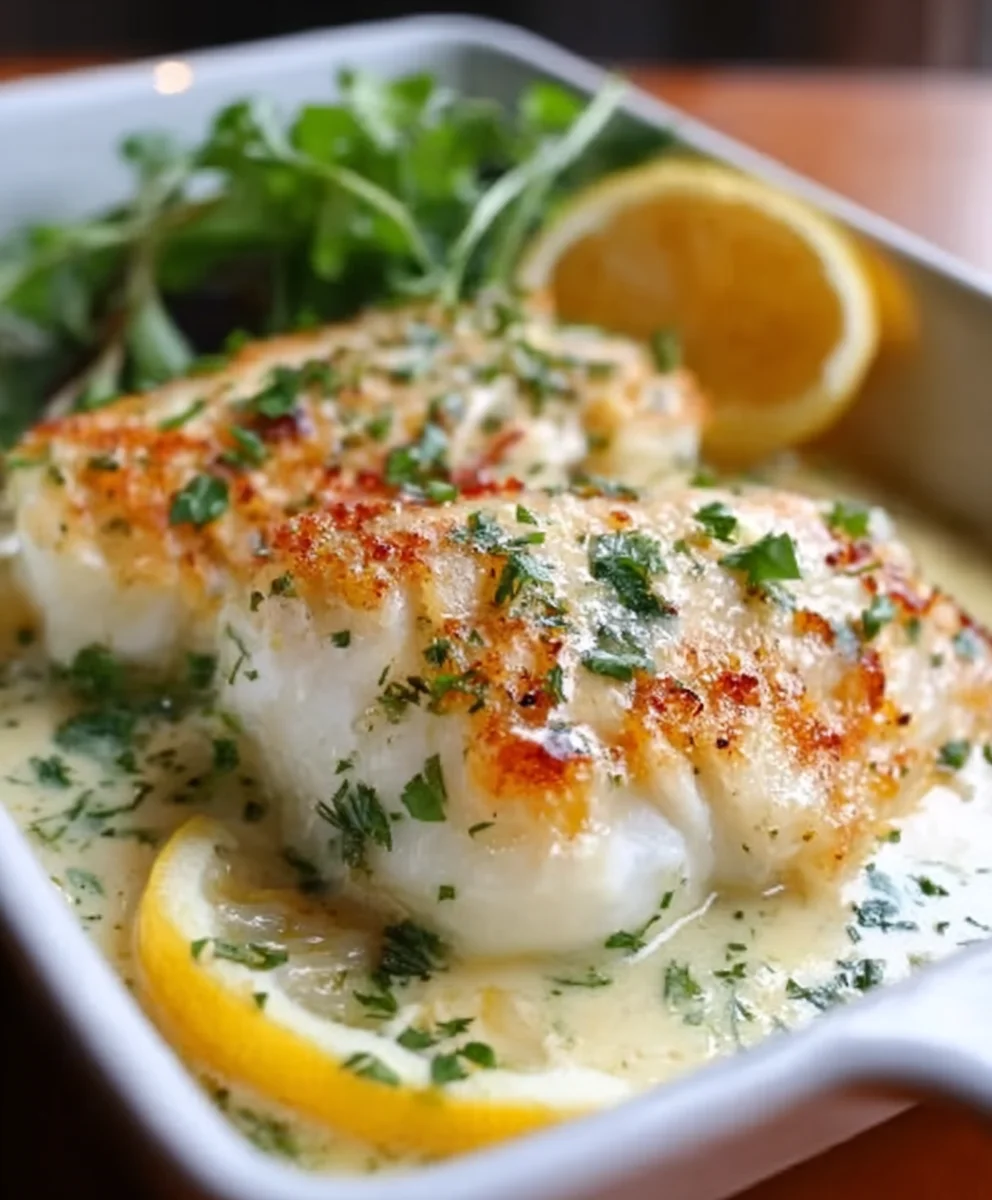
Once the cod is perfectly cooked and the sauce has beautifully coated the fish, carefully remove the skillet from the oven. The sauce should have a lovely glossy sheen and the aromas will be incredible. Sprinkle the chopped fresh parsley generously over the top of the cod and the sauce. This not only adds a beautiful pop of green color but also provides a fresh, herbaceous note that cuts through the richness of the dish. The parsley is the final touch that elevates the presentation and flavor. Serve immediately, spooning extra sauce over each fillet. This Baked Cod in Coconut Lemon Cream Sauce is absolutely divine served over fluffy white rice, a bed of quinoa, or alongside roasted vegetables. Enjoy the delightful combination of tender fish and luxurious, flavorful sauce!
Conclusion:
There you have it – a simple yet incredibly flavorful way to prepare Baked Cod in Coconut Lemon Cream Sauce! This dish truly highlights the delicate sweetness of cod, perfectly complemented by the rich, tangy, and subtly tropical notes of the coconut lemon cream sauce. The baking method ensures a flaky, moist fish that’s both healthy and satisfying. It’s the kind of meal that feels elegant enough for guests but is also quick and easy for a weeknight dinner. I encourage you to give this recipe a try; you might just find your new favorite way to enjoy cod!
For serving suggestions, this Baked Cod in Coconut Lemon Cream Sauce pairs beautifully with steamed jasmine rice to soak up all that delicious sauce, or with a side of roasted asparagus for a fresh, crisp contrast. You could also serve it with a simple mixed green salad for a lighter option.
Looking for variations? Feel free to add a pinch of red pepper flakes to the sauce for a gentle warmth, or incorporate some fresh spinach wilted into the sauce just before serving. If you’re feeling adventurous, a sprinkle of toasted shredded coconut on top before baking adds a lovely textural element.
Frequently Asked Questions:
Can I use a different type of fish?
Absolutely! While cod is fantastic here, other flaky white fish like haddock, tilapia, or even halibut would work wonderfully in this Baked Cod in Coconut Lemon Cream Sauce. Just adjust the baking time slightly based on the thickness of the fillet.
How can I make the sauce thicker?
If you prefer a thicker sauce for your Baked Cod in Coconut Lemon Cream Sauce, you can simmer it uncovered for a few extra minutes after adding the coconut milk and lemon juice. Alternatively, you could create a slurry with a teaspoon of cornstarch and a tablespoon of water, then whisk it into the simmering sauce until it thickens.
Coconut Lemon Baked Cod – Creamy & Easy Recipe
A creamy and easy baked cod recipe featuring a luscious coconut lemon sauce.
Ingredients
-
4 cod fillets (approximately 6 ounces each)
-
1 teaspoon salt
-
½ teaspoon black pepper
-
½ teaspoon paprika
-
1 tablespoon olive oil
-
1 cup full-fat coconut milk
-
2 tablespoons fresh lemon juice
-
1 teaspoon lemon zest
-
2 cloves garlic, minced
-
1 teaspoon Dijon mustard
-
½ teaspoon ground cumin
-
½ teaspoon turmeric
-
½ teaspoon red pepper flakes
-
1 tablespoon fresh parsley, chopped
Instructions
-
Step 1
Pat cod fillets dry and season with salt, pepper, and paprika. Set aside. -
Step 2
Heat olive oil in an oven-safe skillet over medium heat. Sauté minced garlic until fragrant. Add Dijon mustard, cumin, turmeric, and red pepper flakes, cooking for another 30 seconds. -
Step 3
Pour in coconut milk and bring to a gentle simmer. Cook for 3-5 minutes until slightly thickened. Stir in lemon juice and lemon zest. Taste and adjust seasoning. -
Step 4
Gently nestle the seasoned cod fillets into the sauce in the skillet. -
Step 5
Preheat oven to 400°F (200°C). Bake for 12-15 minutes, or until cod is opaque and flakes easily. -
Step 6
Remove from oven, garnish with fresh parsley, and serve immediately with extra sauce.
Important Information
Nutrition Facts (Per Serving)
It is important to consider this information as approximate and not to use it as definitive health advice.
Allergy Information
Please check ingredients for potential allergens and consult a health professional if in doubt.




Leave a Comment